About Us

Showcasing Research through NMSHE Wb-DSS

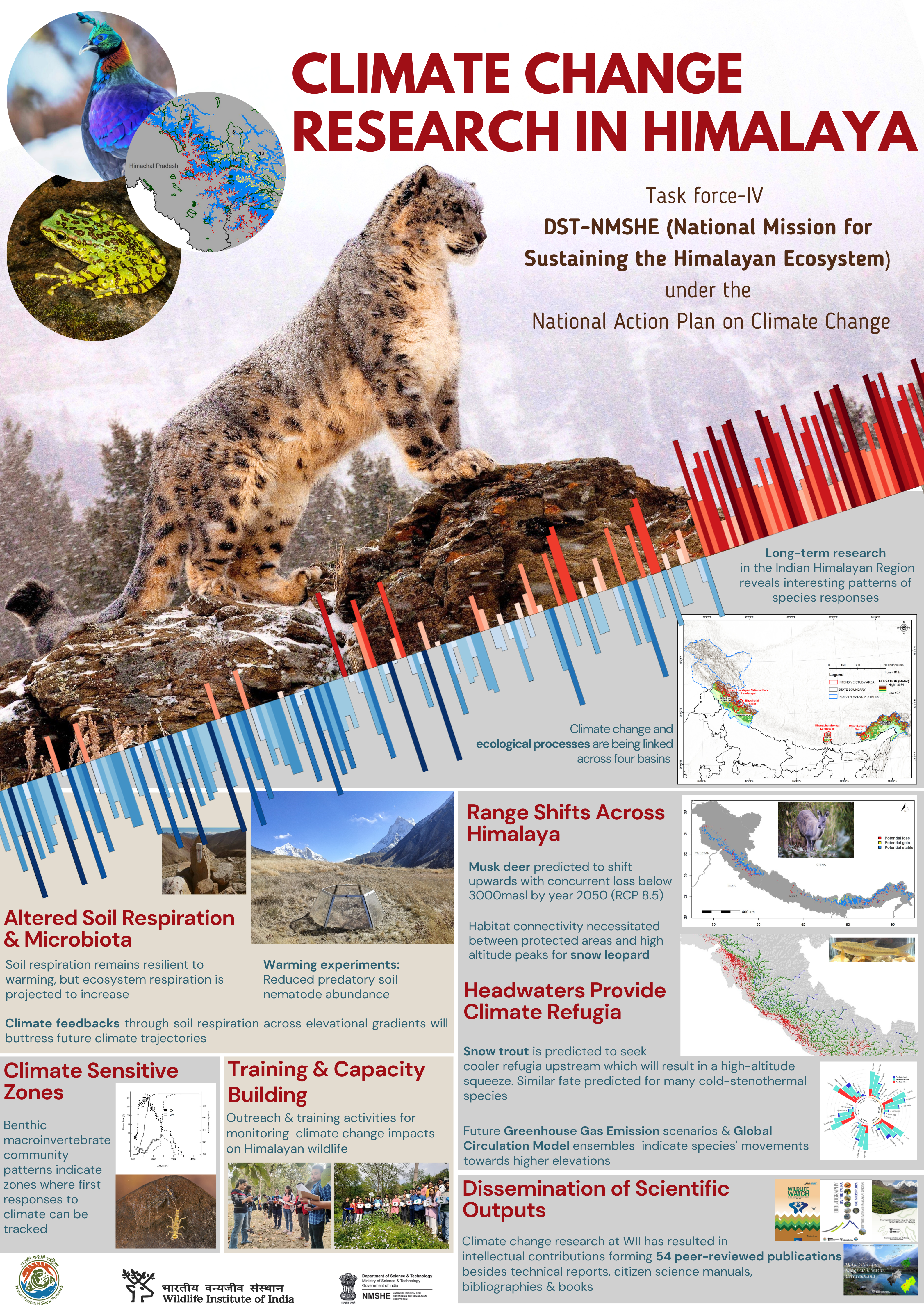
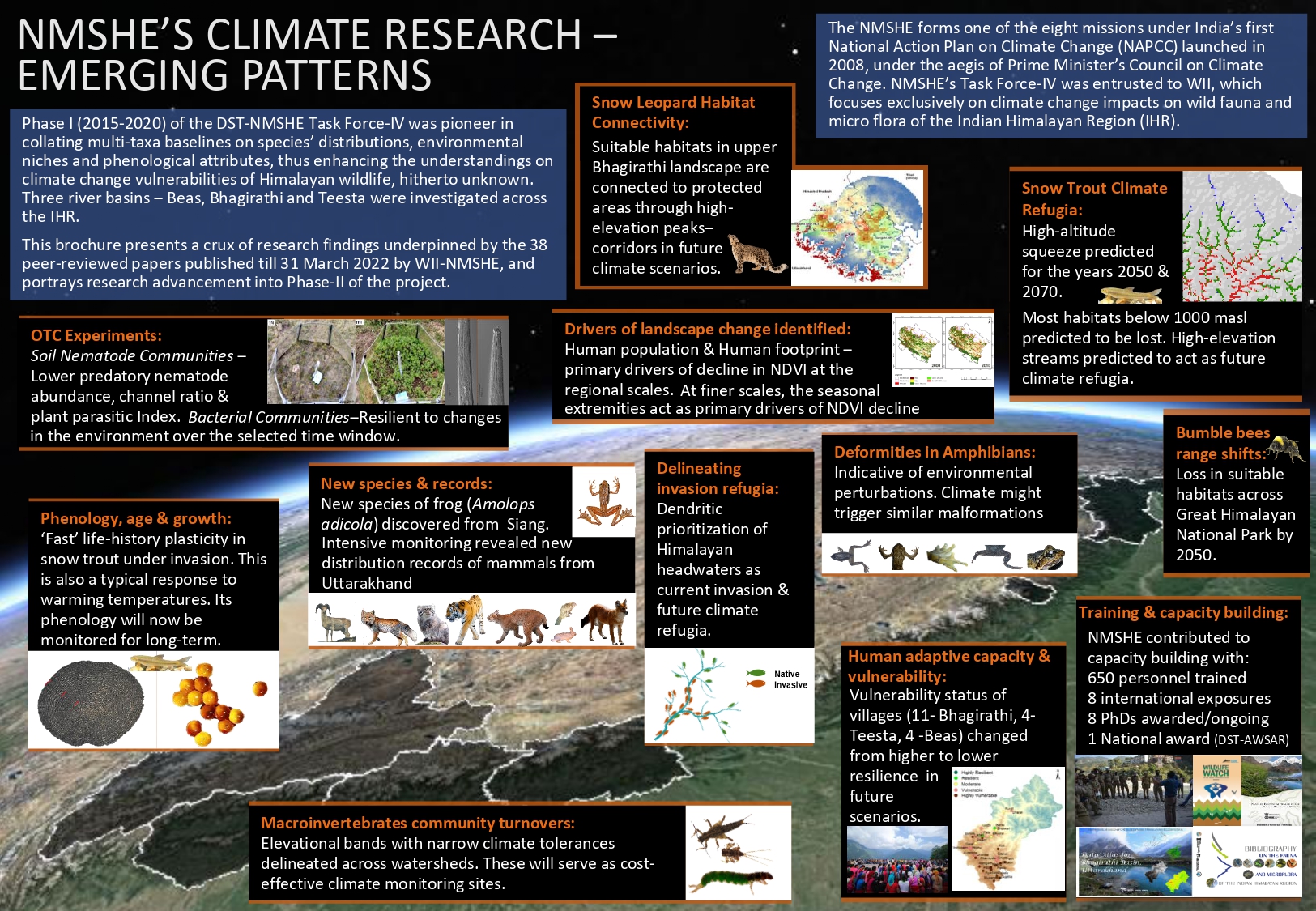
The Wildlife Institute of India, with funding support from the Department of Science and Technology, is actively engaged in monitoring and developing knowledge and tools to guide conservation planning in the context of climate change in the Indian Himalayan Region (IHR). We work with researchers, professionals, State Forest Departments of the IHR, and local communities to develop and deliver actionable information on wildlife vulnerabilities and climate-smart adaptive actions.

Site and landscape-level information in the IHR is often limited, constraining effective decision-making. This platform brings together insights from ongoing research and long-term monitoring to show how climate change is affecting wildlife across freshwater and terrestrial landscapes, supported by ecological observations and fine-scale environmental evidences.


About NMSHE

The NMSHE is one of the eight National missions forming the core of India’s first National Action Plan on Climate Change (NAPCC) launched in 2008. The NMSHE aims to offer practical adaptation strategies based on primary and secondary data and state-of-the-art analyses. NSMHE has six task forces, involving specialized institutions for each task. 

Micro flora and fauna and wildlife & animal populations
Wildlife Institute of India

Natural & geological wealth
Wadia Institute of Himalayan Geology

Traditional Knowledge Systems
Jawaharlal Nehru University

Forest resources & plant biodiversity
G.B. Pant Institute of Himalayan Environment

Water, ice, snow, including glaciers
National Institute of Hydrology

Himalayan Agriculture
Indian Council of Agricultural Research


About NMSHE–WII

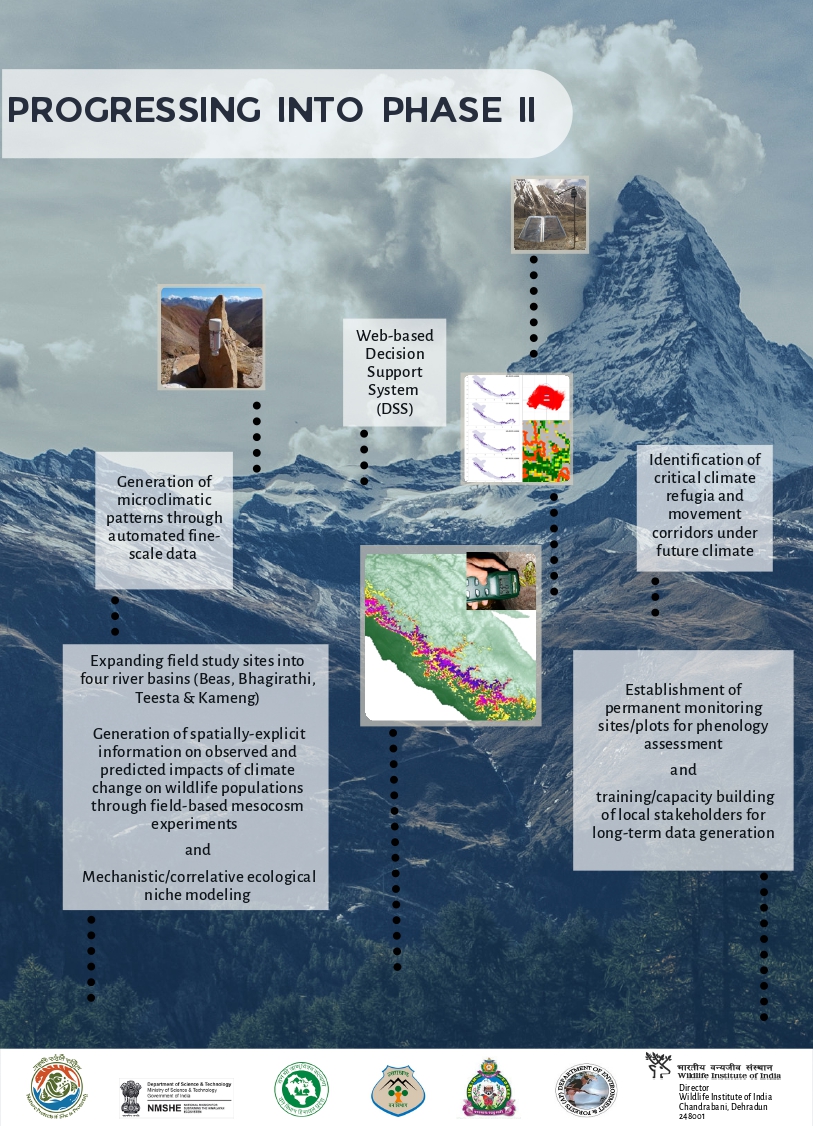
The NMSHE Task Force–IV was commissioned to the Wildlife Institute of India (WII) with an idiosyncratic emphasis on climate change impacts on wild fauna and microflora, aiming at “Assessment and Monitoring of Climate Change Effects on Wildlife Species and Ecosystems for Developing Adaptation Strategies in the Indian Himalayan Region (IHR)” . Monitoring the climate impacts on Himalayan wildlife was a complete lacuna, and TF–4 was established to conduct research with the following objectives:

  • Identifying landscape change drivers
  • Conducting field research on wildlife aspects (terrestrial, aquatic, microflora, and habitats)
  • Developing monitoring and Decision Support Systems (DSS) for indicator species in the IHR
  • Model building and visualization for climate change impacts on Himalayan wildlife
  • Spatial and inter-operable database generation
  • Capacity building and sensitization